

When a client sits down across from their therapist, it's the therapist who is listening. The therapist who is observing. The therapist who is using their clinical judgement to make assessments and determine next steps.
Unless the recording and transcript are handed off to an "ambient listening" AI scribe or note taker...
Because in that case:
The AI is doing that first pass at listening -- by recording and then transcribing the conversation.
The AI is doing that first pass at observing -- processing that transcript and identifying and extracting the details from the session.
The AI is doing that first pass at using "clinical" judgement, taking those extracted details and transforming them into a note with what it has determined to be the important elements and observations, next steps, etc.
AI can feel like magic sometimes. Click a button before a therapy session begins, and BOOM, it magically has a progress note written once the session is over.
But what's not always acknowledged is what responsibilities are being handed off to the AI. Even if the therapist reviews what is written, the AI is still being given that first crack at these super important responsibilities.
Because it all feels so magical, sometimes we lose sight of that.
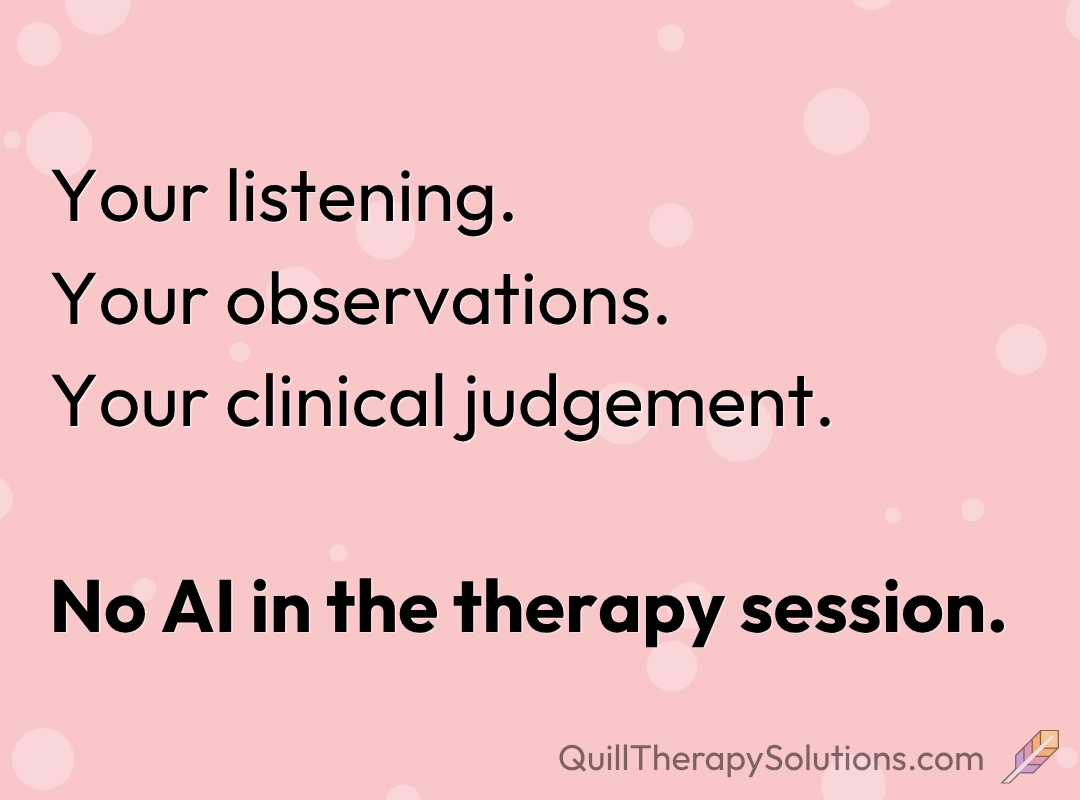
So anyway, we'd prefer to keep human therapists in the driver's seat!
At Quill, we do not record or transcribe therapy sessions. And we do not introduce AI into the therapy session. We keep that between the humans. Quill is only used after the session is over, when the therapist sits down to do their notes. It's the therapist that chooses what important details to share -- and which ones to keep to themselves. It's the therapist that decides on their assessment, next steps, etc.