Every few days, AI gives us another reminder that it needs to be used responsibly, and humans are not always responsible.
This week’s example: Grok (Elon Musk’s AI chatbot pride and joy) has been posting sexually explicit images on X (formerly Twitter).
To be clear, human beings are prompting Grok to post these images. But the bigger issue is this: Grok and X simply have not built the guardrails to reliably prevent it. And that matters, because X is still a massive public platform where real people search for real professionals.
We’re bringing this up because we know many of you (like us) left Twitter a long time ago, especially after Elon Musk took over. And honestly, that decision has aged pretty well.
But here’s the catch:
Just because you left doesn’t mean your profile disappeared.
If you didn’t delete your account or make it private, your abandoned profile may still be public, still indexed, and still floating around search results. That means when someone Googles your name -- especially a prospective therapy client -- they may still see your old X profile as a top result and click it.
And lately, we’re seeing a small uptick in X profiles showing up when people search for therapists.
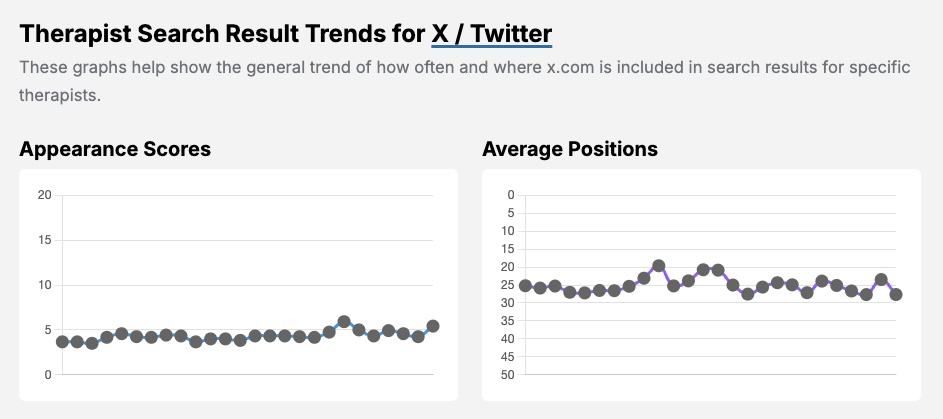
So this is just a gentle nudge: take 60 seconds and search your name. See what comes up. If your Twitter (ugh, we mean X...) profile is still sitting there, decide whether you want it to exist publicly.
It’s totally fine if you do. But if you quietly stopped using Twitter a year or two ago, it’s worth remembering that the internet didn’t stop using your profile.
And at this point, it may be sending people somewhere you never intended them to go.