Therapists are now faced with a choice each day as they step into their office: Do I record therapy sessions, or do I continue to not record therapy sessions?
Assuming you fall into the latter group, since you're here at Quill (where we don't record therapy sessions), why?
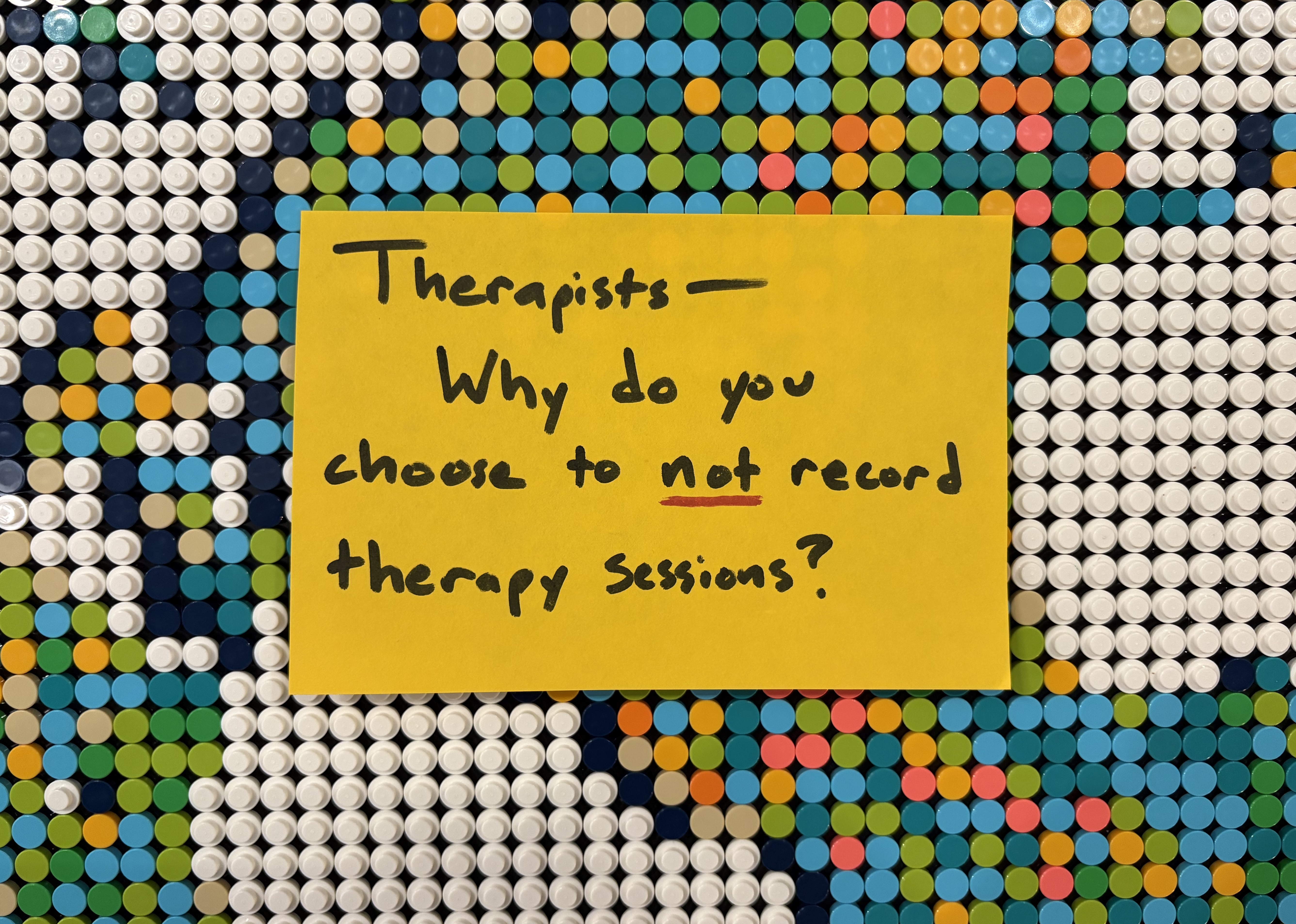
AI documentation features/tools that "listen" to sessions are abundant and relatively cheap. And they're as easy as clicking a button. So what makes you continue to say "no thanks, not for me and my practice and my clients"?
We're working on a list of reasons why it's a bad idea, and while the list is already quite long, we want to hear from more folks!
And if you're a therapy client stumbling upon this post, we want to hear from you too!
Here's a link to our LinkedIn post, where you can post a comment.
Or you can send us an email at jon@quilltherapysolutions.com.
And thank you for not recording your therapy sessions! Whether they realize it or not, your clients are lucky you keep making that choice too.